


Oversized Headboards: Sculpting an Immersive Bedroom
- Jan 3
- 8 min read
How to use exaggerated silhouettes and full-wall installations to reshape the atmosphere of today's bedrooms.

Bedrooms have always leaned toward softness, but lately I’ve been drawn to approaches that bring a sense of structure and presence to the room as well. Instead of a small headboard that lives behind the pillows, we’re now seeing ideas that expand far beyond that — exaggerated silhouettes, wall-spanning installations, and extended compositions that quietly shape how a bedroom feels and functions. It’s less about decorating a wall and more about defining it, allowing the headboard zone to establish proportion, create visual calm, and anchor the space with intention.
What makes this shift especially interesting is how versatile it can be. Sometimes it’s incredibly subtle —
a tonal extension of color or texture that calms the eye. Other times it becomes the true centerpiece, integrating lighting, storage, or even zoning the room itself. Across all of these interpretations, the goal is the same: a bedroom that feels considered, personal, and thoughtfully designed rather than simply furnished.
1. The Full-Span Effect (Wall-to-Wall Headboards)
A headboard that travels from one end of the room to the other instantly rewrites the proportions of the space. Instead of floating behind the bed like a separate object, it becomes the backdrop — unifying everything that sits in front of it.
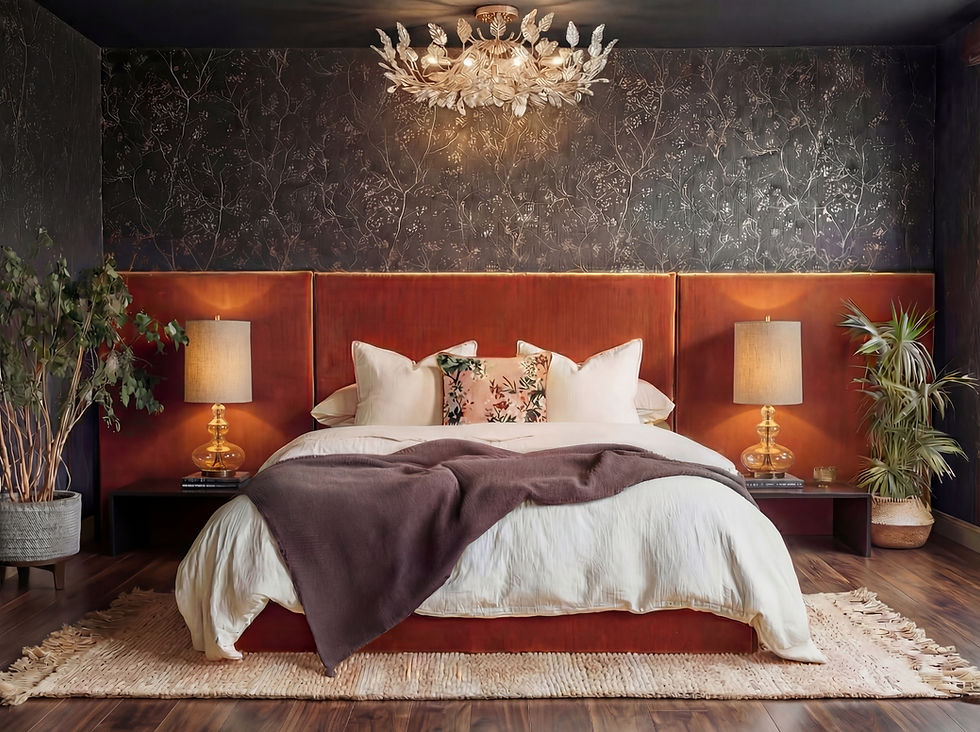
What I love about this approach is how inherently custom it feels. These installations are rarely an “off-the-shelf” solution; they’re purpose-built to stretch exactly from wall to wall, which immediately gives the room a tailored, high-end sensibility. It’s the evolution of what we once tried to achieve with a bold accent wall — except now, instead of just color, we’re shaping the room with depth, massing, and intention. The headboard becomes a composition tool, helping balance the nightstands, lighting, bedding, and surrounding architecture into a single, cohesive visual field.
This can be executed in many materials, but I personally love when at least the portion behind the bed is upholstered. It softens the gesture, adds tactile comfort, and makes the space feel more inviting when you sit up to read or lean back at night. These extended installations also create an opportunity to integrate the practical elements beautifully: concealed lighting, wiring for outlets, switches, or even USB ports — all hidden cleanly behind removable panels so nothing interrupts the visual flow.
It’s a subtle shift with an outsized impact, bringing cohesion and serenity to even the simplest layout.


2. Draped & Dreamlike
(Soft Fabric Backdrops)
Some of the most compelling oversized headboards aren’t solid at all — they’re draped. Floor-to-ceiling textiles act as a soft architectural layer, filtering light, absorbing sound, and creating an enveloping sense of luxury. This is a distinctly European influence, seen often in boutique hotels and older apartments where a fabric backdrop feels timeless rather than trendy.
Where this approach becomes incredibly useful is in real-world bedrooms — the ones with uneven windows, awkward wall conditions, or architectural elements that interrupt where the bed wants to go. Drapery becomes a beautiful problem-solver. It can conceal asymmetry, visually “even out” misaligned elements, and allow the bed to confidently center itself where it belongs.

I also love this solution when placing a bed in front of windows or across an entire window wall; when the drapery is closed, the room reads as cohesive and intentional.
One important note: the drapery should read as the headboard, not replace it functionally. I typically pair it with a low-profile upholstered headboard in the same tone, so it disappears into the softness while still providing the support and durability you need for everyday use. The result is elegant and quietly layered — texture, movement, and atmosphere, all while simplifying and unifying the wall behind the bed rather than adding visual noise.
3. Tonal Harmony
(Color-Drenched Headboards)
When the headboard and the wall share the same color, the room feels instantly calmer and more cohesive. The distinction between architecture and furniture dissolves. I love how this technique softens contrast and allows the eye to rest rather than bounce from element to element.
This concept ties beautifully into the broader idea of color drenching — wrapping a space in a singular hue so the room reads as one enveloping environment rather than a collection of competing pieces. Instead of relying on contrast to create interest, harmony becomes the design language. The effect is atmospheric. Mood-driven. More sensory than decorative. You feel the color as much as you see it, which is especially powerful in a bedroom where serenity matters.
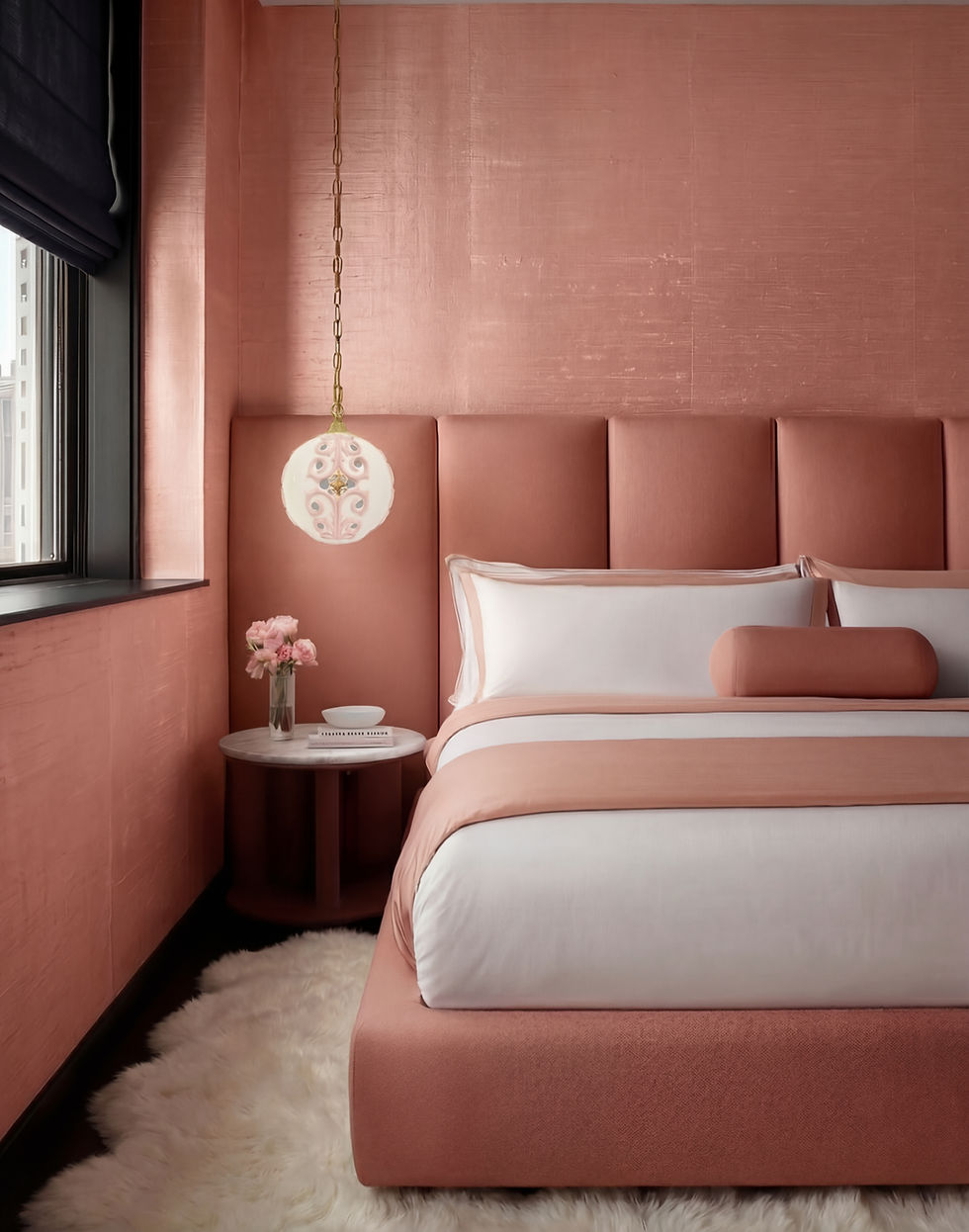

In this particular space, I love how the wall-to-wall upholstered panels are paired with a matching silk wallcovering. The slight shift in sheen adds just the right amount of textural contrast without breaking the visual continuity. The palette is disciplined and confident — allowing only black and white as purposeful accents — so the color becomes the hero without overwhelming the senses. The 7esult feels bold, luxurious, and surprisingly tranquil all at once, proving that intensity and calm can absolutely coexist when the palette is handled thoughtfully.
4. En Suite Architecture (Room-Divider Headboards)
In larger bedrooms — or loft-style spaces without clear boundaries — a freestanding headboard offers both shape and function. These room-divider installations rise behind the bed like sculptural screens, defining a sleep zone without needing full-height walls. Instead of simply filling space, I use them to create a more intentional layout — pulling the bed forward, organizing circulation, and establishing a true sense of purpose for both sides of the room.
The effect is elegant and architectural. It also opens design possibilities behind the headboard: hidden storage, a dressing niche, or a small writing desk. Instead of pushing the bed against the perimeter, the bed steps forward — and the room unfolds around it.

In this Hollywood Hills project, that thinking guided everything. We built a custom divider headboard to pull the bed toward the incredible view, eliminating what would have been leftover, unusable space while creating a beautifully defined sleeping area. Behind it, the feature wall becomes a boundary for a large custom walk-in closet, so the element works spatially, functionally, and visually all at once. To make it feel truly luxurious and purposeful, we integrated USB power and outlets, pendant lighting, directional art lighting, and upholstered the “headboard zone” in leather for comfort. It’s multi-function design at its best — a statement piece that organizes the room, elevates the experience, and feels undeniably bespoke.

5. Elevated Relief (Wall-Mounted Panels)
Not every oversized headboard needs to be upholstered or padded; sometimes the most beautiful solution comes from architectural detailing itself. Whether it’s classic wainscoting, paneled millwork, or — as in this space — beadboard with an added art-ledge cap, these built-in treatments visually read as a headboard while becoming a true enhancement to the room’s architecture.
What I love about this approach is its flexibility. In some bedrooms, you may not want to replace an existing bed, or perhaps you prefer a lighter bed frame like the minimal wrought-iron style here. By extending the paneling beyond the bed and across the nightstand zone, you still achieve that “oversized headboard” feeling — height, presence, and a defined composition —
without needing a massive upholstered piece. The wall treatment becomes the headboard backdrop, anchoring the entire elevation rather than just the bed itself.
In this particular example, the beadboard adds warmth, character, and texture, while the integrated picture ledge introduces function in a subtle, elevated way. Art rests naturally. Styling feels effortless. And the paneling becomes a logical, beautiful mounting surface for sconces, simplifying electrical placement while creating symmetry and purpose. It’s quietly architectural without overwhelming the room — a timeless detail reimagined to behave like an oversized headboard, but with a lighter, more classic spirit.
Shop The Look


SHOP NOW: Painting - Lauren Fuhr, Lake

SHOP NOW: Arteriors Baja Chandelier, Natural
6. Designed as One (Oversized Headboard Beds & All-In-One Surrounds)
There’s also an entirely different way to achieve the oversized headboard look — simply choose a bed where the headboard itself is designed to extend well beyond the mattress. These pieces aren’t pretending to be built-ins or architectural features; they are oversized headboards by design. The surround wraps the sleeping area, stretches horizontally to sit behind the nightstands, and immediately gives the bed a sense of presence that a standard headboard simply can’t.

What I appreciate about this category is the flexibility. Some versions include integrated nightstands for a cohesive “all-in-one” look that feels seamless and complete. Others leave space to incorporate your own side tables, which works beautifully if you prefer a more collected, eclectic feel instead of a matching set. And because these are standalone furniture pieces, they’re incredibly adaptable—you can place them right against the wall, float them slightly forward if you’re working with paneling, or even pull them away from the wall to help define space and direct circulation, as you see here.
This look is becoming easier to source, with more manufacturers offering extended-headboard beds in a range of scales, styles and finishes. But of course, if you have a very specific vision, need unique dimensions, or want something truly one-of-a-kind, our Interior Design Studio, Cley Atelier, also offers custom furniture design and we’d be happy to help bring it to life. It’s one of my favorite ways to tailor a bedroom to how you actually live. Either way, this approach delivers the oversized headboard aesthetic in a way that feels effortless, flexible, and like a true statement piece of furniture in the room.
Shop The Look


7. The Integrated Suite (Built-In Headboards & Connected Elements)
This approach feels like the natural evolution of several ideas we’ve already explored — there are echoes of the room-divider concept from #4, the wraparound quality of wall-to-wall treatments from #1, and even hints of the extended bed surrounds in #6 — but here, it goes a step further. Instead of one element supporting the bedroom, the headboard becomes part of a much larger built-in composition that quietly organizes the entire space.

I find this especially compelling in minimal, zen-inspired, or wabi-sabi leaning interiors, where the goal isn’t to layer more objects into the room, but to reduce visual noise while deepening the feeling of intention. The headboard seamlessly blends into extended floating nightstands (often with hidden storage to keep surfaces calm), continues across the wall as a visual datum, and can transition into other elements — like a window bench, shelving, or even softly integrated closets. Everything feels related. Everything belongs.
In this particular example, I love the way the headboard surface gently flows across the wall and into the built-in bench, grounding the room without looking heavy. It brings warmth, function, and serenity without relying on “matchy” furniture sets. Instead, it’s about uniformity, proportion, and a quieter form of luxury. For those who want their bedroom to feel like a retreat — decluttered, purposeful, and deeply considered — this kind of fully integrated design can completely transform how the room feels and how you live in it.
Shop The Look

SHOP NOW: The Eloise Scallop Milk Glass Table Lamp

SHOP NOW: European Linen Duvet Cover Set

SHOP NOW: Headboard Wall Sconce Reading Light
Closing Thoughts on Oversized Headboards:
Oversized headboards aren’t about scale for scale’s sake. They’re about creating intention — a clearer visual language, a stronger sense of enclosure, a more grounded atmosphere for rest. Whether expressed through wall-spanning upholstery, soft drapery, architectural panels, or fully integrated suites, these expanded forms guide the mood of the room with surprising subtlety.
They make the bedroom feel considered, designed, and quietly elevated. And in a world where so many spaces compete for attention, the bedroom becomes what it was always meant to be: a retreat shaped with purpose.
Shop More Oversized Headboards

SHOP NOW: Gia Francois Tapestry Headboard


SHOP NOW: Jonas Bed w/ Winged Panel Headboard
Love this trends but not sure how to customized things to your specific space? That’s where we come in. For more in-depth interior design services, see below for more information & visit our Interior Design Studio Cley Atelier.


_edited.png)


_edited.png)


